Newswire · Company
Tesla Grew Again in Q2 — and Burned $1.09bn Doing It
Record deliveries, a missed profit line, and a cash-flow reversal of about $2.5bn in a single quarter. Read carefully, because it tells you less than it looks like it does.
Two numbers from Tesla's 22 July 2026 results deserve more attention than they got, and they point in opposite directions.
The first: growth returned
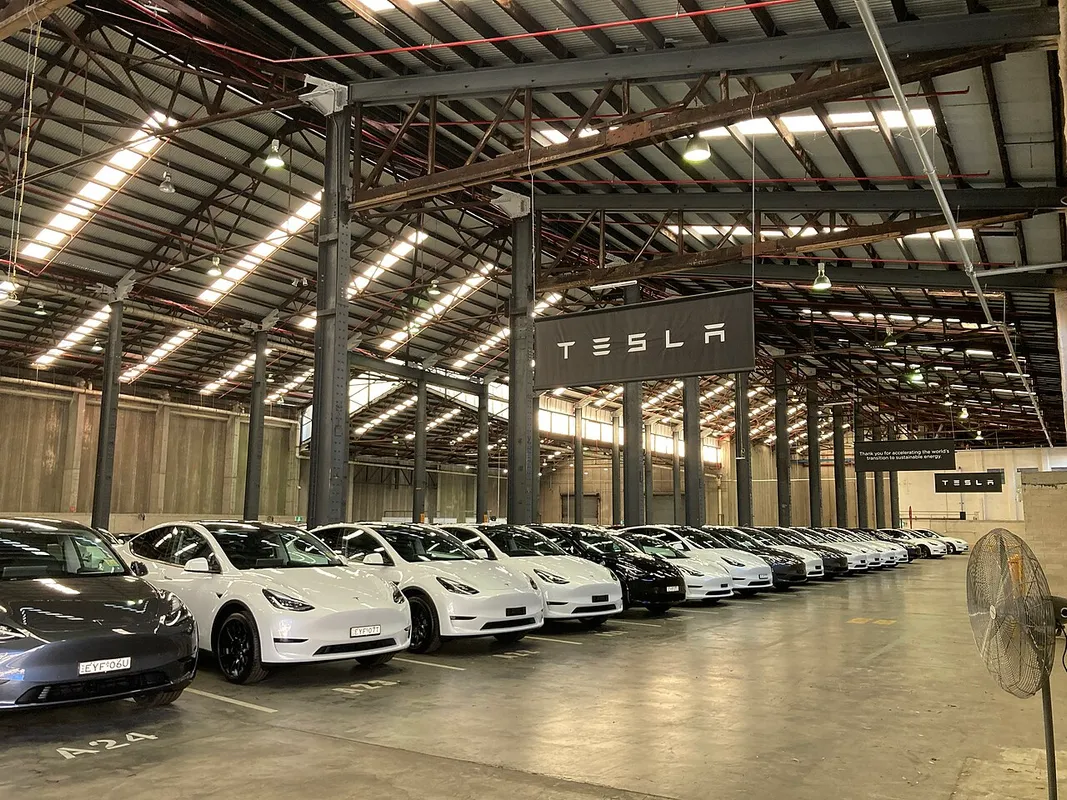
Tesla delivered 480,126 vehicles in Q2 2026, up 25% year on year. That is the best second quarter the company has had, and — the part that actually matters — its first year-on-year delivery growth in two years. Production was 451,758. Revenue reached $28.24bn, up 26%.
The second: the cash went the other way
Free cash flow came in at −$1.09bn, against +$1.44bn in Q1 2026. That is a swing of roughly $2.5bn in one quarter. Adjusted earnings per share were $0.33 against $0.51 expected, and the shares fell nearly 3% after hours. Energy generation and storage brought in $3.14bn (up 13%); services and other $4.58bn (up 50%).
| Measure | Q1 2026 | Q2 2026 |
|---|---|---|
| Free cash flow | +$1.44bn | −$1.09bn |
| Deliveries, year on year | Declining | +25% |
Why we are publishing this on a referral site
Because the inference people draw from earnings is almost always wrong in the same direction. Strong quarter, so the referral perk will be cut; weak quarter, so it will be sweetened. Neither follows. Tesla has changed referral terms in good quarters and bad ones, and it has never tied a programme change to a results announcement.
What we can say with confidence is narrower and more useful: the referral programme did not change on 22 July 2026. The three-month FSD (Supervised) trial on an eligible new Model 3 or Model Y is what it was before the results, and it is what it is today. If you see a page reasoning from these figures to a prediction about your benefit, that page is guessing.
What the delivery number does not tell you
A delivery is counted when a car is handed over, not when it is ordered. The 480,126 figure therefore describes orders that were largely placed in earlier weeks and months, working through to handover in the quarter — it is a record of fulfilment, not of current demand. Tesla does not publish an order backlog, so there is no public figure that says how many people are waiting today.
That gap matters for anyone trying to read their own position from these numbers. A quarter of strong deliveries does not tell you whether ordering now means a short wait or a long one; that depends on your market, your configuration, and where in a quarter you order. Tesla's own configurator estimate for your build is the only delivery-timing figure with your order in it, and it is the one to trust over any inference from a national total.
What would actually be a signal
If you want to watch for a change to the referral benefit rather than guess at one, watch the things that carry it:
- Tesla's own refer-and-earn page for your country. Terms change there first, and they change without an announcement.
- The line in a current order summary. When the benefit changes, it changes in what buyers see at checkout — which is why dated reports from real orders are worth more than commentary.
- Regional rollouts. Programme changes have repeatedly landed in one market before others, so a change reported abroad is a reason to re-check your own country's page, not a statement about it.
None of those are earnings lines. Free cash flow, earnings per share and the share-price reaction tell you how a quarter went for investors; they have no established relationship with what a referral link is worth to a buyer, and treating them as a leading indicator has no track record behind it.
One quarter is not a trend. A single quarter of delivery growth after two years of decline, and a single quarter of negative free cash flow after a positive one, are each one data point. We are reporting both because reporting only the flattering one is how a company page reads, not how a news page should.